
A raised wooden bed at full production. The structure elevates roots above poorly draining subsoil and allows a controlled growing medium.
Why Raised Beds Work in Polish Urban Conditions
In most Polish cities, garden and allotment soils reflect decades of use: compacted pathways, irregular organic matter distribution, and in some older urban areas, remnants of construction fill. Raised beds bypass these issues entirely by creating a growing environment above ground level.
The practical advantages in a continental climate — with cold winters and variable spring temperatures — include:
- Soil in a raised bed warms up faster in spring, allowing earlier sowing by up to two weeks compared to flat ground
- Drainage is easier to control: the bed can be filled with a mix optimised for the crops being grown
- Root depth and structure is predictable, which simplifies spacing calculations
- Beds can be covered with fleece or polytunnel film without elaborate support structures
Sizing a Raised Bed
The most practical dimension for a single-person tended bed is 1.2 m wide and any length up to about 3 m. The 1.2 m width allows working from both sides without stepping into the bed — a critical rule, since foot traffic on growing soil compacts it and damages root zones. Shorter beds (0.8–1.0 m wide) are appropriate for balconies or narrow courtyard strips where access is from one side only.
Standard depths for common crops:
- Salads, spinach, strawberries: 20–25 cm is adequate
- Tomatoes, courgettes, peppers: 30–35 cm allows full root development
- Carrots, parsnips, beetroot: 40 cm minimum for straight root formation
- Potatoes: 40–45 cm, with earthing-up space above the initial soil level
Balcony Beds
For balcony installation, structural load is the primary constraint. Most residential balconies in Polish apartment buildings can handle loads between 150 and 300 kg/m², but this should be confirmed with building management before installing permanent structures. Lightweight growing media (perlite-amended mixes) reduce weight substantially without sacrificing drainage.
Frame Materials
The most common frame material in Polish allotments is untreated pine planking, typically 25 mm thick. Pine is inexpensive, widely available at building suppliers (sklepy budowlane), and workable without specialist tools. Untreated pine will last four to seven years in outdoor conditions before needing replacement. For longer life without chemical treatment, the main alternatives are:
- Larch (modrzew): naturally rot-resistant, lasts ten to fifteen years outdoors
- Douglas fir: less common in Poland but available from larger timber merchants
- Recycled composite boarding: made from reclaimed wood fibre and plastic, very durable and now sold in several Polish hardware chains
Avoid railway sleepers treated with creosote — this preservative leaches into soil and is not suitable for food growing areas.
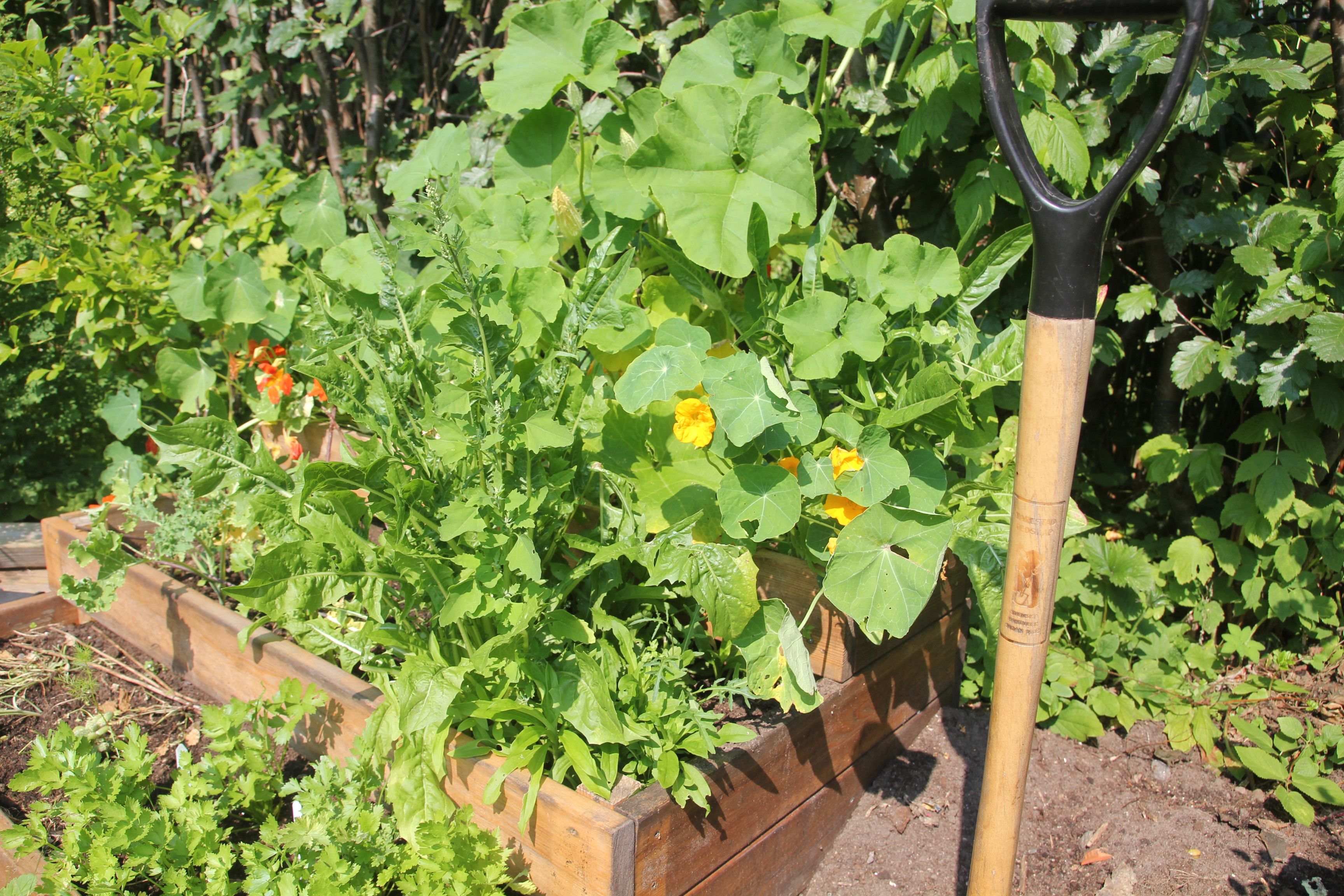
Young crops established in a raised bed. The clean growing medium and defined edges make spacing and irrigation straightforward.
Filling a Raised Bed
The quality of the fill determines how well the bed performs. A commonly used ratio for general vegetable growing:
- 60% topsoil (ziemia ogrodowa) — provides weight, minerals, and microbial life
- 30% compost — improves water retention and feeds soil biology
- 10% perlite or coarse sand — improves drainage and prevents compaction
Pre-bagged topsoil and compost sold in Polish garden centres varies in quality. Products labelled "ziemia ogrodowa uniwersalna" (universal garden soil) are suitable as a base, but checking the NPK content on the bag is worthwhile — very high nitrogen content in bagged compost can cause leafy growth at the expense of fruiting.
Filling a 1.2 m × 2.4 m bed to 35 cm depth requires approximately 1,008 litres of growing medium — roughly ten to twelve 80-litre bags. Buying in bulk from a local landscape supplier is significantly cheaper once the bed is larger than 1 m³.
Irrigation in Raised Beds
Raised beds dry out faster than in-ground growing because they have no connection to the water table and greater surface area relative to volume. In a Polish summer — with July temperatures regularly above 25°C and occasional dry spells of two to three weeks — beds may need watering every two to three days. Options:
- Drip tape: laid along rows at installation, connected to a standard hose tap. Efficient and compatible with timer valves.
- Soaker hose: woven into the bed surface; slower and less precise than drip tape but easier to install retrospectively.
- Manual watering can: sufficient for beds under 4 m²; time-consuming for larger setups.
Mulching the surface with straw, leaf mould, or grass clippings reduces evaporation by a measurable amount in dry conditions and suppresses annual weeds.
Companion Planting in Small Beds
With limited space, combining crops that support each other makes practical sense. Established combinations that work in Polish growing conditions:
- Tomatoes + basil: basil deters common whitefly; both prefer similar watering schedules
- Courgettes + nasturtiums: nasturtiums attract aphids away from courgette stems
- Carrots + spring onions: the strong scent of spring onions is reported to reduce carrot fly (śmietka marchwianka) activity
- Beans + brassicas: nitrogen fixed by bean roots benefits brassicas planted in the same bed the following season
References
Related: How to Start an Allotment Plot in Poland — Seasonal Planting Guide