
A typical allotment complex. Individual plots are separated by paths and low fencing, each plot between 300 and 500 m².
The Polish Allotment System
Community garden plots in Poland operate under a framework established by the Polski Związek Działkowców (PZD), the Polish Allotment Holders' Association. The PZD manages a network of Rodzinne Ogrody Działkowe (ROD) — Family Allotment Gardens — spread across nearly every major city and town. Membership in a local ROD gives access to a plot under a long-term lease, typically renewable annually or on multi-year terms.
The legal foundation is the Act on Family Allotment Gardens of 2013, which clarifies tenant rights, infrastructure responsibilities, and the conditions under which a plot can be transferred or terminated.
The PZD maintains an online list of ROD gardens and available plots at pzd.pl. Availability varies significantly by city — plots in Warsaw and Kraków often have waiting lists, while smaller towns frequently have vacancies.
Finding and Applying for a Plot
The search typically starts by contacting the management board (zarząd) of a specific ROD directly. Most gardens have a notice board at the entrance listing available plots and contact details. The application process involves:
- Submitting a written application to the ROD board
- Attending a brief meeting with the board to confirm identity and intent
- Signing a lease agreement (umowa dzierżawy działkowej)
- Paying the annual fee, which covers maintenance of shared infrastructure
Fees vary between gardens but typically range from 200 to 600 PLN per year depending on plot size and the condition of shared facilities (water points, fencing, paths). New members are sometimes asked to contribute a one-time joining fee.
What the Lease Covers
Under PZD regulations, the lease grants use of the plot for personal, non-commercial cultivation. Key points from the 2013 Act:
- Permanent structures (sheds, greenhouses) require approval from the ROD board and must not exceed defined dimensions
- Plots cannot be sublet to third parties
- The allotment holder is responsible for maintaining the plot in a cultivated state — long neglect can lead to lease termination
- Water and electricity connections, where available, are metered separately
Assessing Your Plot Before the First Season
A newly leased plot may have been cultivated by a previous holder for decades, or it may have been left fallow. Both scenarios require a soil assessment before planting.
Soil Structure
Polish garden soils are highly variable. Urban plots often contain construction fill layers at depth, while suburban ROD gardens may sit on heavy clay or sandy loam depending on the region. The first task is to dig a test pit roughly 40 cm deep in several locations and observe:
- Soil colour: dark topsoil (próchnicy) indicates organic matter; pale or orange layers suggest clay or compaction
- Drainage: does water pool at the bottom of the pit within 30 minutes of rain?
- Texture: squeeze a handful. Sandy soil falls apart; clay holds shape; loam crumbles slightly
pH Testing
Most vegetables prefer a pH between 6.0 and 7.0. Simple pH test kits are available at garden centres (sklepy ogrodnicze) across Poland. If the soil is below pH 5.5, ground limestone (wapno nawozowe) applied in autumn will gradually raise it. If above 7.5, sulphur amendments or acidic mulches help.
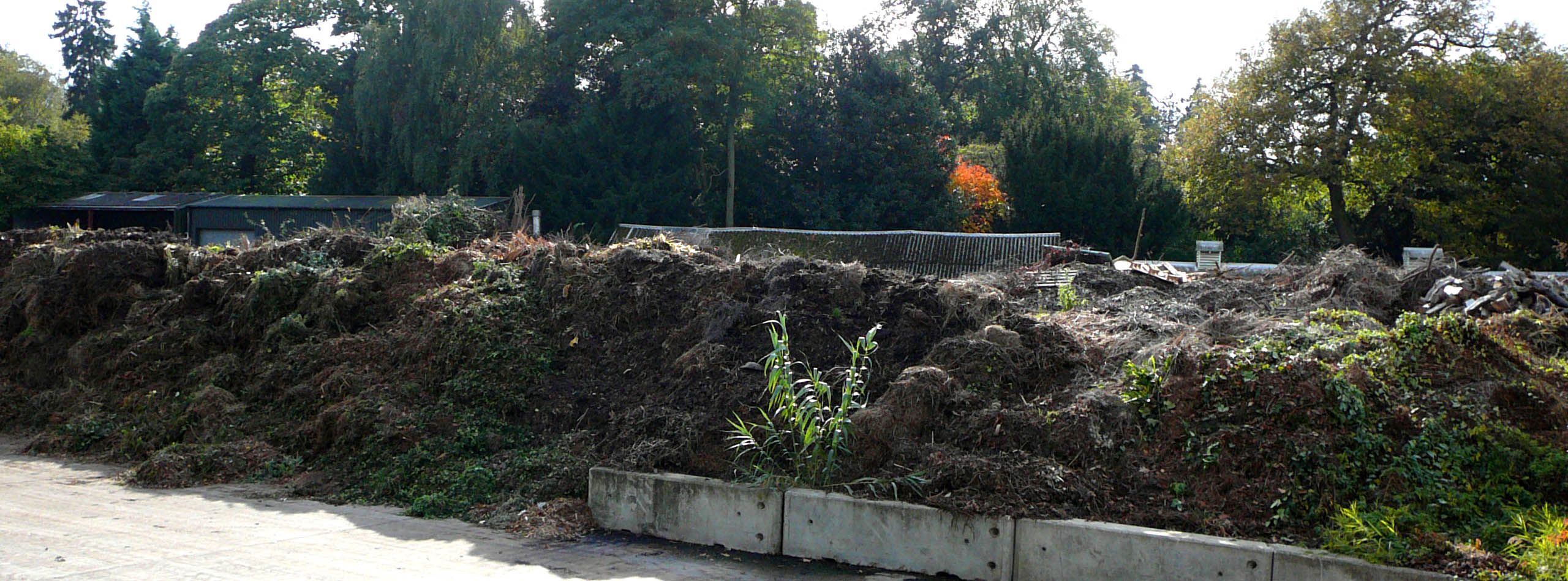
A compost heap in progress. Most ROD gardens have designated composting areas; individual plots benefit from a small corner bin.
First-Season Priorities
For most new allotment holders in Poland, the first season is better spent building soil quality than maximising yields. Practical priorities:
- Clear perennial weeds — particularly couch grass (perz) and bindweed (powój). These spread underground and are difficult to remove once a crop is established.
- Add organic matter — compost, well-rotted manure, or leaf mould dug into the top 20 cm improves both sandy and clay soils.
- Mark out growing areas — raised beds or row systems both work; what matters is defining paths so soil in planting areas stays loose and uncompacted.
- Start simple crops — radishes, lettuce, courgettes, and beans are forgiving in variable soil and give quick results in the first year.
Administrative Requirements to Keep in Mind
ROD members are typically required to attend the annual general meeting (walne zebranie) of their garden, usually held in spring. The meeting sets the annual fee, elects the board, and discusses any changes to garden regulations. Missing multiple meetings without notice can be noted by the board.
Any construction on the plot — even a small shed — requires a formal application to the ROD board and adherence to size limits defined by PZD regulations. In 2023, the allowed dimensions for a garden shed were revised; current limits can be confirmed at pzd.pl.
References
Related: Raised-Bed Techniques for Small Urban Spaces — Seasonal Planting Guide